Since 1st of January, 2014:
Professor, Department of Modern Languages, University of Helsinki
Formerly:
Chief Research Scientist, PhD, Docent (Adjunct Professor)
[
GROUP,
CV,
PUBS,
BLOG
]
For a full list, see my publications page. See also Google Scholar.
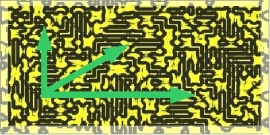
The phenomena within humanities and social sciences have traditionally been too complex to be studied with formal and/or computational methods without a clear risk of serious reductionism or applying very restricting background assumptions. My long-term interest is to promote research in which the complexity of real world phenomena is respected when computational methods are developed and applied. Methodologically the focus is in statistical machine learning and agent-based simulation methods. With a number of collaborators, I have published articles e.g. related to linguistics, philosophy, sociology, psychology, economics, cognitive studies of religion and political science.
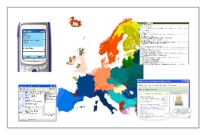
The basic motivation of for my research in this area stems from the need for language-independent and context-sensitive semantics that will speed up development of natural language processing tools and their applications, and the need for new neurocognitive approaches to natural language processing. Machine learning methods make it possible, among other things, create models of conversational language with a large proportion of spelling mistakes, unusual or incomplete syntactic structures, abbreviations and creative use of language with rapid introduction of new lexical items and expressions.
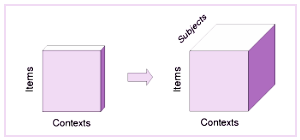
According to a commonly held view, concepts are seen independent of any historical, contextual or subjective factors. However, due to differences in the individual life and learning paths, different subjects have gained different conceptual constructions. Therefore, the language use includes subcultures as well as individual idiosyncrasies. My research objective is to develop theories and methods that are based on the recognition of subjectivity of understanding the world and language.
Married to Nina Honkela, two children. Hobbies: go, golf, photography.